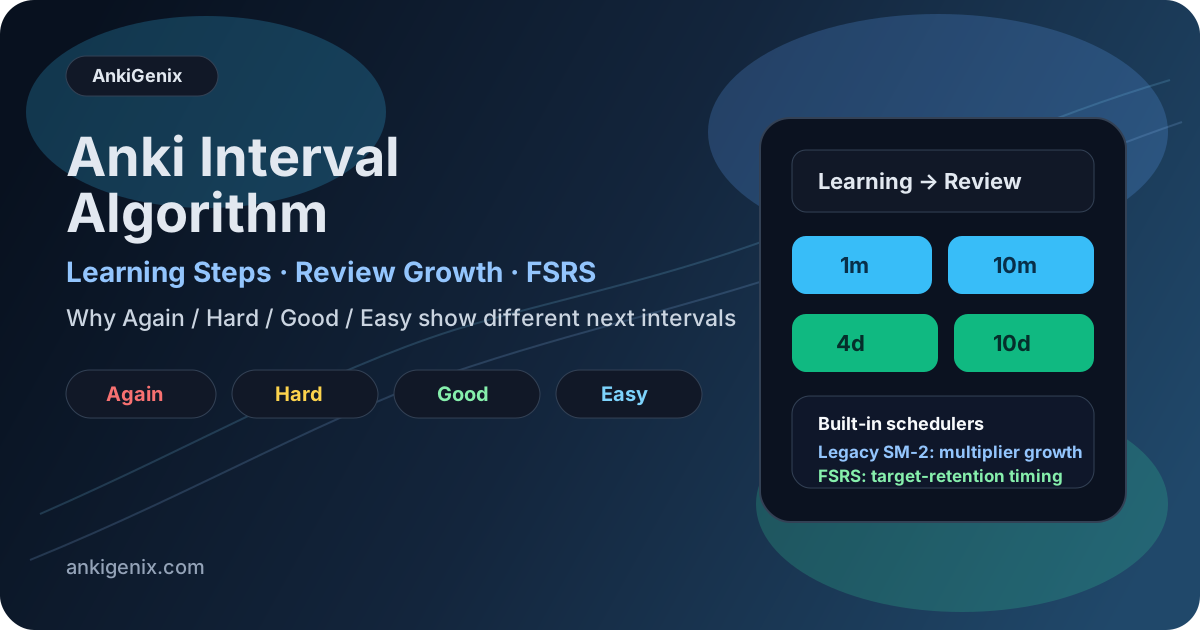
How Anki's Built-In Interval Algorithm Works: Learning Steps, Review Intervals, and FSRS
Anki does not use a fixed interval table. Its built-in scheduling depends on learning steps, review performance, and whether you use the legacy SM-2 scheduler or FSRS.
How Anki's Built-In Interval Algorithm Works: Learning Steps, Review Intervals, and FSRS
If you are trying to understand Anki seriously, one question shows up very quickly:
why do Again, Hard, Good, and Easy produce such different next intervals for the same card?
The short answer is that Anki does not use a simple fixed schedule table.
Its built-in interval logic depends on the card's current stage, the button you press, the card's review history, and the scheduler you are using.
The easiest way to understand it is to split Anki into two layers:
- Learning phase: new cards move through Learning Steps first.
- Review phase: graduated cards then use a long-term scheduler.
For long-term scheduling, Anki currently includes two built-in approaches: the traditional legacy SM-2 logic and FSRS.
1. Learning comes first: new cards follow Learning Steps
Suppose your Learning Steps are 1m 10m 1d. A new card will roughly behave like this:
Again: return to the first step, so it comes back in1mGood: move to the next step, then10m, then1dHard: on the first step, it usually shows a delay between the first two steps; later it usually repeats the current stepEasy: graduate immediately and use the Easy Interval
This is the first place many people get confused.
New cards are not using the full long-term interval logic yet.
They are primarily following your Learning Steps until they graduate.
2. In review mode, legacy SM-2 stretches intervals by multipliers
If you have not enabled FSRS, you are mostly seeing Anki's legacy SM-2-style scheduling.
The key idea is not "fixed days."
It is closer to previous interval multiplied by button-dependent factors.
With default-style settings:
- Starting Ease is about
2.50 - so repeated
Goodanswers often grow the next interval by roughly2.5x Hardis more conservative, closer to1.2xEasyis more aggressive thanGood, because it also benefits from Easy Bonus
A simple example:
- previous interval:
10days - press
Good: next interval may be around25days - press
Easy: longer than25days - press
Hard: noticeably shorter
So when you see a card jump from a few days to a few weeks, that is usually not random behavior.
It is the normal consequence of multiplier-based review growth.
3. Why can intervals get longer after a long break?
This is one of the most surprising parts of Anki, but it is also one of the most sensible.
If a card was due in 5 days, but you come back 20 days late, Anki does not pretend those extra days never happened.
It takes the actual time the card went unseen into account.
The official FAQ gives a representative example:
Hard: about6daysGood: about37.5daysEasy: about81.25days
The reasoning is simple.
If you still remembered the card after being away for much longer than planned, Anki assumes the memory is more stable than the old due date suggested.
That is also why resetting an entire deck after a break is usually a bad trade.
4. Once you enable FSRS, the logic changes
FSRS is built into Anki as an alternative to the legacy SM-2 scheduler.
When FSRS is enabled, Anki hides several SM-2-specific controls, including things like:
- Graduating Interval
- Easy Bonus
- other settings centered on ease-based growth
FSRS focuses on a different question:
given your review history and target retention, when is the best next time to show this card?
The official docs highlight two especially important points:
- Desired Retention defaults to
90%, and raising it increases workload quickly. - If you forgot the answer, press
Again, notHard.
That second point matters because in FSRS, Hard still means "remembered, but with difficulty."
If you use Hard for true failures, future intervals can become unreasonably long.
5. What should you actually pay attention to?
If you are still using legacy SM-2, focus on:
- Learning Steps
- Graduating Interval
- Easy Interval
- Interval Modifier / Starting Ease
If you are using FSRS, focus on:
- Desired Retention
- whether your parameters have been optimized
- whether your learning and relearning steps still stay within the same day
But regardless of scheduler, one thing matters more than memorizing formulas:
your cards need to be atomic and clear.
If your real bottleneck is making cards rather than scheduling them, it is often faster to generate a clean first draft from your material and then let Anki handle the review timing. For example, you can start from PDF to Flashcards or Text to Flashcards.
Final takeaway
If you only remember one line, make it this:
Anki uses Learning Steps first, then a long-term scheduler after graduation; legacy SM-2 mainly grows intervals with multipliers, while FSRS predicts the next best review time from target retention and review history.
So when Again, Hard, Good, and Easy show very different numbers, that is not mysterious behavior.
It is Anki deciding when the next review is most worth showing.