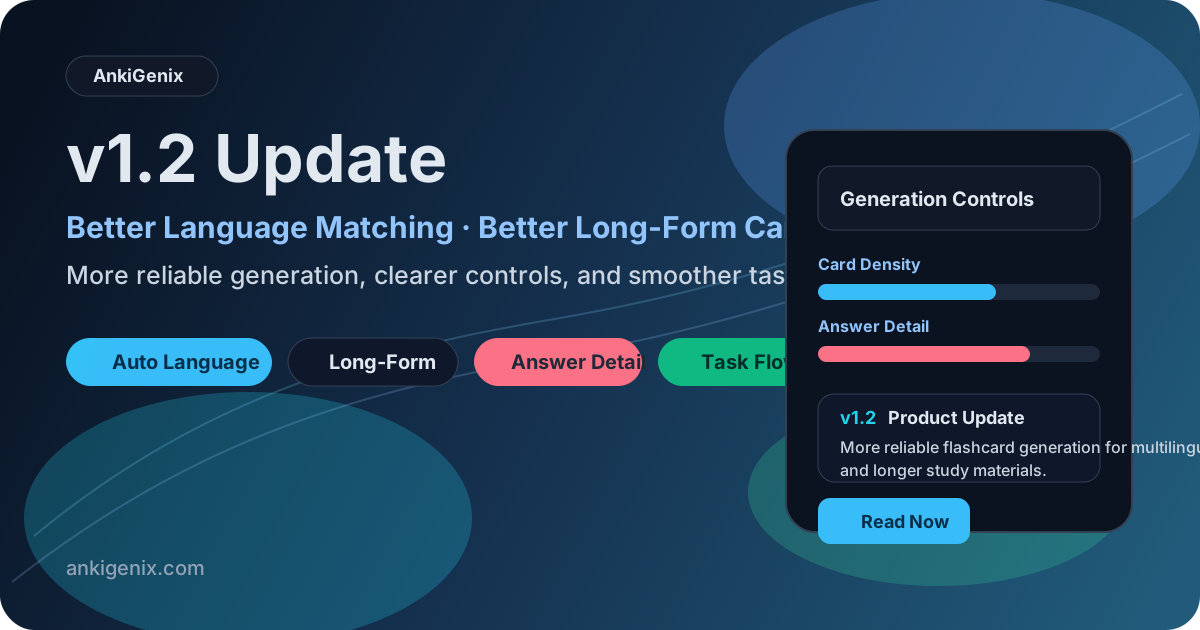
AnkiGenix v1.2 Update: More Reliable, More Controllable Flashcard Generation
v1.2 improves multilingual generation, long-form flashcard creation, and answer detail controls, while fixing credit deduction and generation stability issues.
AnkiGenix v1.2 Update
v1.2 is a release focused on the flashcard generation experience.
This update targets several issues that had the biggest impact on day-to-day use:
Automode could sometimes return English cards incorrectly- Medium and long articles could produce omissions, duplication, or overly long answers
- You could control card count, but not answer depth
- Task feedback during generation was not timely enough
- Some failed requests could still lead to confusing credit behavior
If you often study with multilingual content, research-style material, or longer articles, the improvements in v1.2 should be much more noticeable.
Highlights
1. Multilingual generation is more reliable
Previously, Auto mode could sometimes lean toward English output even when the source content was not in English.
With v1.2, generation now follows the source language more consistently.
This is especially useful if you regularly work with Chinese, English, or mixed-language material.
2. Long-form generation is more stable
Longer content has always been the easiest place for flashcard quality to drop.
Once content gets longer, common problems show up quickly:
- important concepts get missed
- similar cards start repeating
- individual cards become too dense
- answers get too long for effective review
v1.2 improves flashcard creation for long-form and terminology-heavy content.
When the source is longer, results are now more stable overall, with:
- better coverage
- fewer duplicates
- clearer, more atomic cards
3. New answer detail control
Previously, you could only adjust card density, meaning how many cards the system should produce.
In practice, many users also care about something else:
How concise should each answer be?
That is why v1.2 adds a new answer detail option.
You can now control two things separately:
- how densely the content is split into cards
- how brief or detailed each answer should be
This matters for different study goals:
- for quick fact review, you can choose higher density with shorter answers
- for concept-heavy review, you can choose lower density with more detailed answers
We also placed this option next to card density in the UI, so the overall card-control flow feels more natural.
4. Task pages feel smoother
Task pages now refresh automatically.
You no longer need to keep manually refreshing while waiting for generation results to appear.
Experience and stability improvements
Safer credit handling
We fixed an important issue here:
credits are now only deducted when the request actually succeeds.
This avoids unfair credit loss on failed requests and makes billing behavior much easier to trust.
Other fixes
- fixed some locale-related display issues
- improved defensive handling in parts of the outline flow
What v1.2 means for you
If you mostly generate cards from short and simple content, v1.2 will mainly feel more stable and more consistent.
If you often generate from the kinds of content below, the gains should be more obvious:
- Chinese or other non-English materials
- medium to long articles
- content with a higher density of technical terms
- learning flows where answer detail matters as much as card count
What’s next
After v1.2, we will keep pushing along the same direction:
- improve card atomicity and coverage
- further reduce duplicate cards
- keep improving results on long-form and technical content
- continue polishing overall generation experience and reliability
If you are already using AnkiGenix, keep sending us real examples from your workflow.
That feedback directly shapes what we improve next.