AnkiGenix v1.4 Update: Better Imports and Safer Account Workflows
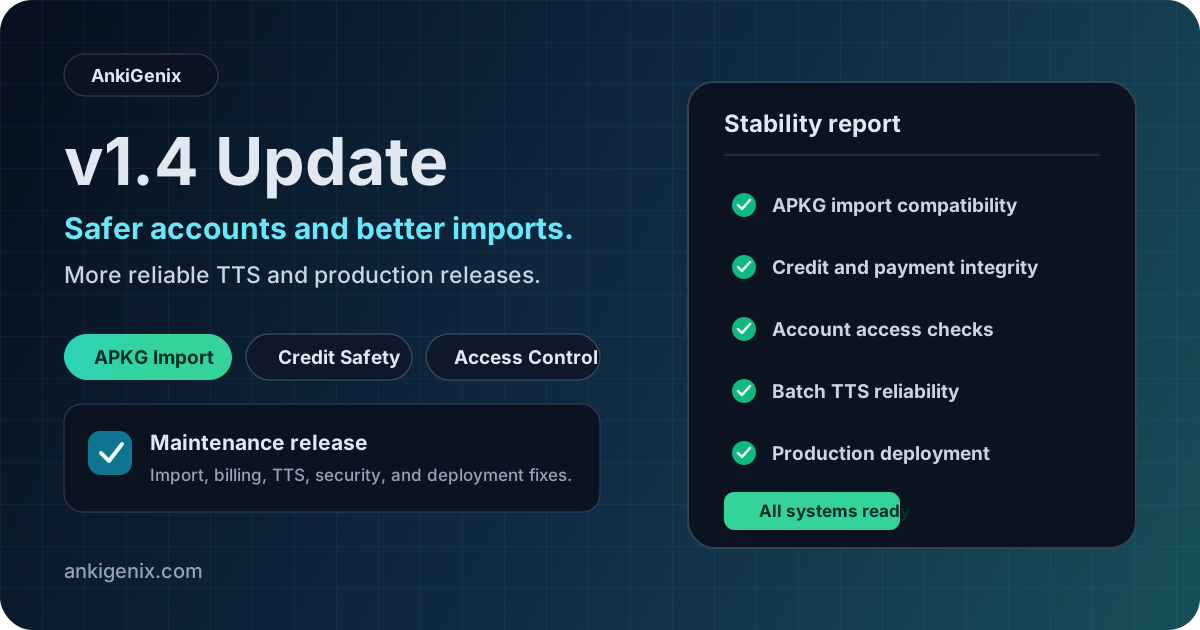
v1.4 improves APKG compatibility, credit accounting, payment state handling, access checks, TTS reliability, and production deployment.
AnkiGenix v1.4 Update
v1.4 is a release focused on reliability and data consistency.
This update strengthens several workflows that matter in daily use: importing third-party APKG files, granting and consuming credits, tracking subscription state, generating TTS audio, and deploying the production application. It also tightens access checks around tasks, files, and decks.
Highlights
1. Better APKG import compatibility
APKG files created by different Anki versions and third-party exporters do not always use the same field order or metadata format. In some cases, a file containing valid cards could still be treated as empty.
v1.4 updates the import parser to:
- accept Anki metadata IDs stored as numeric strings
- read note values according to their declared field order
- recover cards when useful content is outside the first field
- assign a recognizable fallback name when deck metadata is missing
- show a more specific reason when a file cannot be imported
If you move decks between tools, this release should reduce cases where a valid APKG file produces no cards.
2. More consistent credits and payments
Credits determine whether generation tasks can complete, so v1.4 strengthens the full grant, consumption, expiration, and migration flow.
The main changes include:
- preserving first-expiring-first-out credit consumption
- applying stronger consistency protection to grants, deductions, and expiration
- issuing signup rewards only once during retries or concurrent requests
- using the same accounting rules when anonymous cards move into an account
- handling subscription expiration, renewal, and credit purchases more accurately
These changes address edge cases involving duplicate grants, stale balances, and mismatched transaction records.
3. Stronger account and content access checks
This release reinforces authorization across generation tasks, uploaded files, AI chat, deck templates, and bulk card operations.
The application now verifies ownership more consistently before content can be read or changed. Protected actions are also rejected for banned accounts, while payment callbacks and scheduled jobs receive stricter request validation.
There are no extra steps for normal use. The result is clearer separation between account data.
4. More reliable batch TTS generation
We fixed connection cleanup and overall timeout behavior in batch speech generation, and restored the TTS entry point on deck pages.
When both Google and Azure speech services fail, the task now returns a clear error promptly instead of holding resources for too long. For larger decks, this reduces the risk of rising memory usage and stalled batch jobs.
5. A more dependable production release flow
Production builds now run consistently inside Ubuntu 24.04 on WSL, avoiding mixed Node.js dependencies across operating systems. Release archives are extracted once on the server, and the application reuses the content index generated during the local build.
This release has completed its database migration, PM2 restart, and live page health checks.
What v1.4 means for you
Your usual flashcard workflow stays the same. The improvements are most visible when you:
- import APKG files from different Anki versions or third-party tools
- review your credit balance after signup, renewal, or consecutive generation tasks
- generate TTS audio for a larger deck
- need a useful reason when a generation or import task fails
- depend on stable task and page responses from the hosted service
We will keep prioritizing issues that can cause failed tasks, inconsistent data, or unrecoverable study output.